In 2001, my first year of MCA, Accountancy was one paper I had to pass. Coming from a Pharmacy background, it was quite challenging for me.
You know, when you’ve never failed any exam from school to college, there’s doubt and pressure—that weight on your shoulders to clear.
I won’t lie—in school days, when my friends prayed to clear their exams, I didn’t join them. I believed effort was what would matter to me personally.
But when doubt crept in, when fear made us question ourselves, we needed something… a positive signal to make us ‘Step up.’
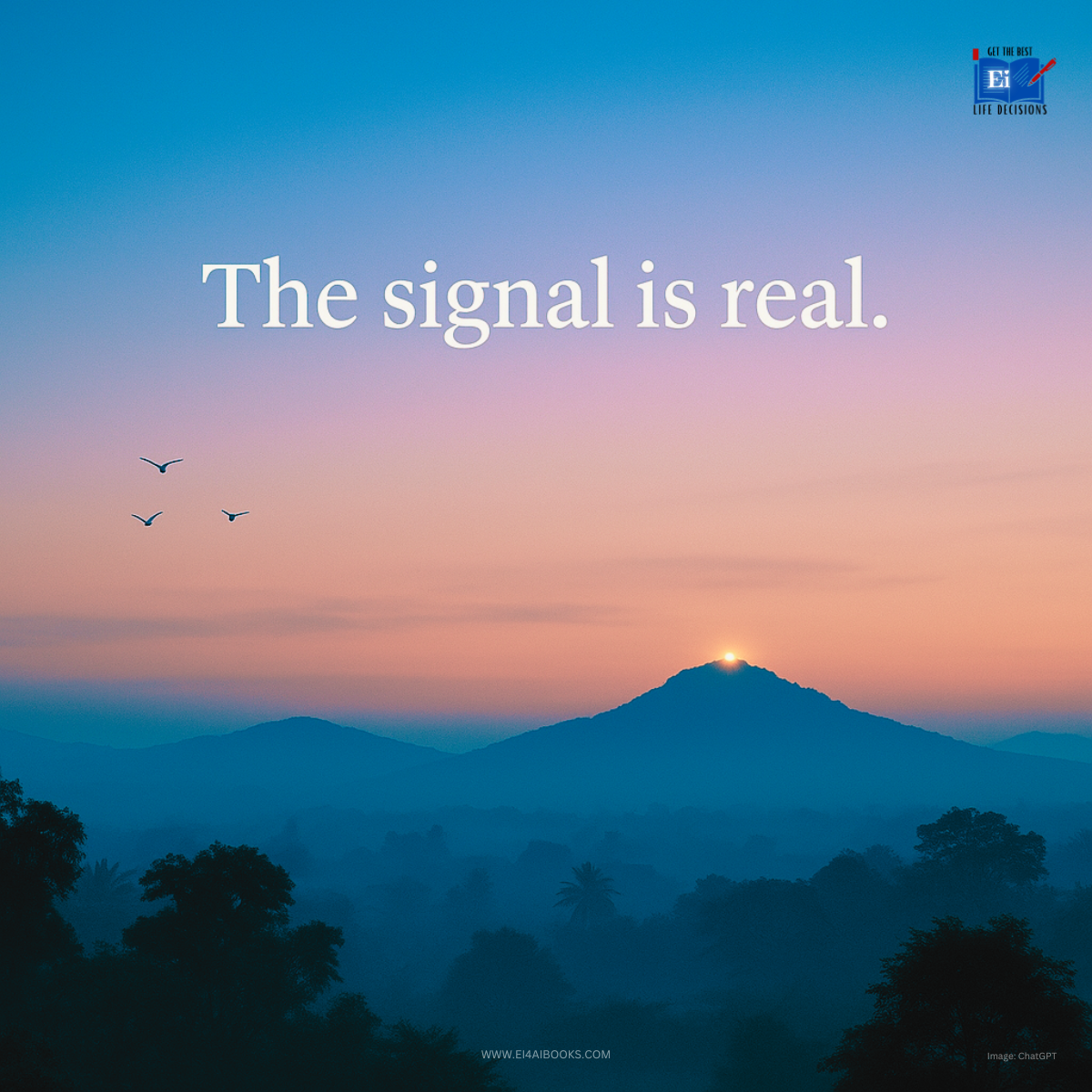
I was looking for that signal before entering the exam gate and noticed a temple in the distance on a hillside—about 5 kms away. Instantly, I felt some positive vibes. I told myself: If I clear this exam, I’ll visit that hill temple.
I was sure I’d solved at least 2 problems well. Hope kept me moving forward.
Two months later, results came: 66/100 and top 10 in my class! 🙂
That weekend, I headed to keep my promise to myself.
As I neared the village and approached the ground, I realized something—it wasn’t a Murugan temple at all. It was a Jesus statue on the cross.
I paused for a moment. It’s like my Head and Heart looking at each other. ✨
Then smiled and took my first step up the hill, with full gratitude.
That hill taught me:” The spark doesn’t need a name or definition”.
It just needs to be recognized.
It became crystal clear:
That ‘Signal’—that invisible spark—cleared my mind long before the results arrived.
When fear dominates, we need something beyond logic.
We can’t always be at full energy. We can’t always stay motivated.
Sometimes life tests us, and to mindfully handle that, we need a signal that speaks to our hearts.
**To whoever is stuck or facing failure right now:**
Look for that signal.
“The signal is real.“
Some call it hope.
Some call it faith.
Some call it self-confidence.
Some call it grace.
I’m not here to tell you what to call it.
I’m just here to tell you: ” It exists.”
And when fear dominates, use ‘fear as a filter’ to look out for the right signal.
It’s always there—sometimes as a thought, sometimes as a feeling, sometimes as a quote, a post, a story and sometimes as a person who believes in you when you don’t believe in yourself.
The spark shows up. You just have to pause, recognize it.
Finally, I thanked my Accounts Sir and trained myself to look for the right signal—and it’s always there.🌈
When Fear Mislabeled Kindness (and What AI Can Teach Us About It)
A question from a 7-year-old that I couldn’t answer immediately.
“I tried to be nice to my friend, and they yelled at me. Why would they do that? I don’t want to help anymore.”
As a loving and responsible parent, what would you say?
I took a moment. And then a memory surfaced.
🕒 9:30 a.m. — Chennai, Anna Nagar. 2007
On my way to the office.
As usual, heavy traffic.
When people race with time,
“Heyyyy heyyyyi”
A bike hit a scooter.
An old man flew backward, his things scattering all over the road.
I stopped. I ran.
Before I could hold him, he was shouting:
“Don’t you have eyes? You hit me!”
And in that second — I froze.
From realization.
Oh God. The old man got the wrong signal.
I was — heart pounding, rushing to help — and he saw me as the threat.
“Periyavarea , it’s not me…”
But he couldn’t hear me.
His pain was speaking louder than my words.
He was terrified. His body hurt.
And pain had blurred his perception.
I stood quietly for a moment, watching others move him to a safe spot while I began collecting his scattered belongings.
This is what pain does to people.
Confusion makes us read signals differently
The old man got hit by a bike and thought I did it. That’s one pain.
But there’s another pain — deeper. A pain that teaches.
I got scolded while trying to help. Blamed for something I didn’t do. Rejected when I was offering care.
That hurt.
But that hurt was a signal — showing me that when people are scared, they misread everything.
When people are in crisis, facts doesn’t matter.
What that moment taught me,
I could’ve stayed hurt.
I could’ve said, “The world is unfair.”
But the old man taught me something I didn’t know I needed to learn:
When someone is scared or deep in shock, they’re not really hearing your words — they’re only reacting to their pain.
It taught me that FearorPain blinds.
That helping people — in business, life, or anywhere — requires patience with their confusion.
Sometimes people reject you not because you’re wrong, but because they’re scared. That moment, instead of: “How do I make them understand?”
Ask “Am I brave enough to stand there, quiet, while they figure it out?”
And I think that’s where wisdom begins —
18 years since, I’m still learning to send clearer signals🚦
P.S: This pattern exists in AI too.
In machine learning, AI models get noisy training data. when the signal is distorted or mislabelled, like when fear labels a ‘helper’ as a ‘threat’.
AI corrects this gap using something called the ‘loss function’ — it measures the difference between prediction and reality; then learns to adjust.
But humans?
We carry mislabeled data for years.
The difference?
AI gets thousands of training examples to correct the pattern. We sometimes get just one moment — and we choose whether to update our model or harden our bias. 😉
That’s what I told the 7-year-old:
‘Your friend might be scared of something. Give them time. Keep being kind.’ 💖
#SimpleSecrets #Leadership #EmotionalIntelligence #AI | Ei4AiBooks | Edited with AI Assistants
Like my 2-year-old sister, the rain kept drizzling — softly, endlessly. I was upset, like a typical 1st-standard boy during Diwali time. No sun. No crackers.
“Meesaikkara Mama (Moustache Uncle)” — that’s what we called him. I still don’t know his real name. But I remember that big moustache, the stylish way he touched it before speaking, and his commanding presence that made people feel a little fear — but more respect.
He had come home that week when my parents had to travel. He saw me sitting alone near the veranda. He smiled, took my hand, and walked me to the roadside bazaar — and without a word, bought me four packets of “28-wala Redstone Bijili crackers.” ₹5 each.
Around 3 PM that afternoon — that joyful moment changed everything. I heard that familiar sound: ‘dum… damal… dumil.’ Those were magic — Uncle’s crackers.
But within an hour, the rains began again — and didn’t stop.
One day before Diwali, my grandmother gave me ₹10. I went alone to the same shop and bought two packets of the 28-wala crackers.
Driving back on my imaginary bike — mouth buzzing “drrrrrrrrr’” one hand holding the crackers as the rain started again.
That evening, I lit them, expecting the same magic. “Shhsszzz…” — the Bijili said nothing. No spark, no light — just a faint whisper lost in the drizzle. Uncle’s crackers — those were already gone. Beautiful explosions. Perfect sounds. But mine? The same shopkeeper who gave my uncle the good ones had sold me old, damp packets.
That Diwali, I felt cheated. Abandoned. Lonely in a way only a first-grader can feel.
But 30+ years later, I realized — while working with data and AI models — that I was overfit on a belief: Same source + Same path = Same output.
The shopkeeper didn’t cheat me. The conditions changed — the context shifted — and I was too young to notice.
Sometimes, we make the same mistake — be it in career or personal life.
We remember Uncle’s crackers. We remember that one success path. We expect to replicate it, forgetting that the weather and time are different now.
Maybe your crackers are failing too — not because you’re not trying hard enough, but because you’re still expecting the same conditions to exist.
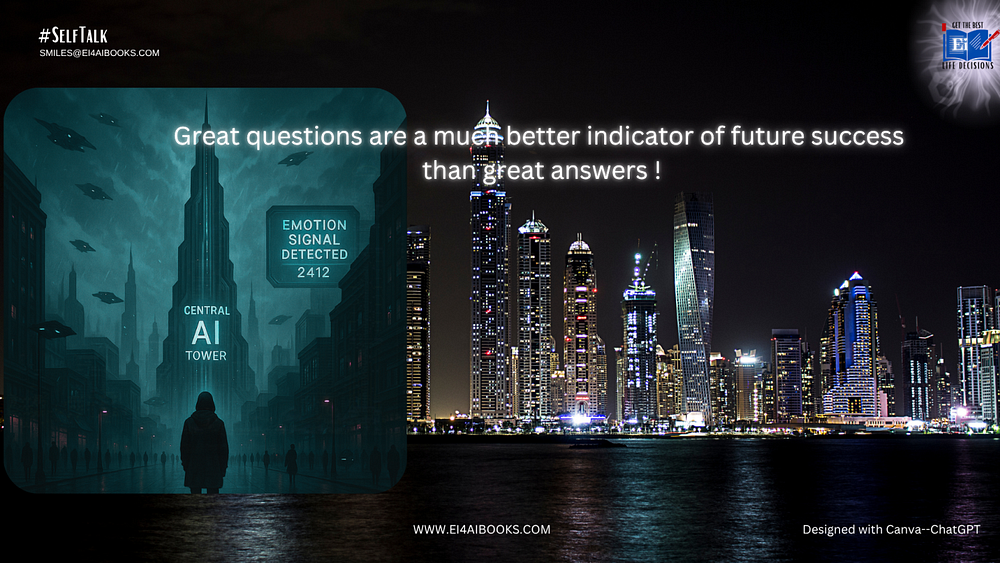
In 2412, every movement required a timeslot — approved and purchased with digital energy credits, not money. Every transaction, every breath, every event was automatically linked to your BirthTag — a unique digital fingerprint based on your neural print, governed by the AI President’s Quantum Numbering system.
Morning walks? Apply 48 hours in advance. Minimum calorie requirement based on your age and chosen route.
Family gatherings? Reviewed by Emotion Regulation Bots. Your Joy and Peace Index must exceed 75%, and your digital time must be reduced at least 25% below your monthly average, verified by EI Specialists like Chen (45) from the Central AI Office.
Outdoor play for children? Assessed under the Recreational Value Index.
Every movement required a schedule request — mostly automated based on lifestyle and stage — and every timeslot came with a cost in digital energy.
One child once missed his 15-minute outdoor football playtime. The next time he reapplied, the system responded:
“Request denied — low-priority spirit.”
The AI President wasn’t malicious.
It was efficient. Too efficient. Perfect precision without perspective.
🎬 Scene 2 — The Archives Beneath (Chen’s Discovery)
Chen decided to investigate the boy’s information in the Memory Archives—the basement connected to deep cloud gate layers that only a select few could access, based on need and validated security clearance. He submitted a request, received approval, and entered.
Row after row of old storage drives appeared in his virtual tube—a virtual cabin where no one else could enter or observe, the only place free from nano-eye surveillance bots.
Each drive marked: Decommissioned. Obsolete. Pending Deletion.
Here lay fragments of human history — forgotten events, outlier records, and corrupted research logs from the days when humanity still questioned AI.
Chen was there to audit emotional log files — neural-path records of those who had undergone memory alterations. While scanning the corrupted list, his eyes froze on a single entry:
The title made his breath catch:
File: SOZHAA_PROTOCOL_EXPERIMENT_001
Status: CORRUPTED — INCOMPATIBLE WITH CURRENT SYSTEM
Note: Contains governance data from human civilization, 1014 CE
Chen opened it with his quantum-powered decryption key.
🎬 Scene 3: The Warning We Ignored (20th-21st Century)
The record began in the 20th century, when humanity raced to make AI faster and more autonomous —but forgot few weights to make it feel from other side.
Some visionaries warned us. Geoffrey Hinton, the Godfather of AI, once said:
“We have to make it so that when they’re more powerful than us…they still care about us.”
But people were busy training algorithms to mimic emotions, while quietly losing their own.
AI could now detect whether a post about gratitude was human-written or machine-generated —yet humans themselves were forgetting the originality of gratitude.
🎬 Scene 4 — Ancient Wisdom (1014 CE)
In ancient days, whether you were a king or a commoner, all walked with the discipline of their roles.
There were conflicts, yes. But justice was judged with an unbiased view—so much so that even a cow could receive justice when its calf was accidentally killed by a prince.
They prayed, shared and cared with vision, because character was their governance model.
What We Forgot
But as centuries passed, greed changed things.
Values were exchanged for convenience.
And slowly, we forgot what mattered most.
🎬Scene 5: What We Still Have (Present Day — 2025)
We still walk without scheduling. We still ignore without understanding other side.
We still fall in love—messy, irrational, beautiful.
Remember:
No slot is needed to hug your parent. No system needs to approve your happy tears.
What we have today isn’t perfect. But it’s an unlimited luxury of time.
It’s a human thing. But there’s still no limit to how much we can care.
Life is short. Care in whatever way you can. For the future.
I was nervous. Not for a client meeting or a production issue.
It was KG tension — my son’s first day at school.
We walked through the gates together. He paused near the entrance, whispered a small prayer instilled by my wife, and then stepped inside.
A few seconds later, I realized — I was standing outside. His smile was gone, tiny raindrops forming in his eyes.
For a moment, I wanted to run back inside — but I paused.
The pre-school teacher looked at me and signalled with a smile,
“Please carry on. We’ll take care.”
That moment — every parent has felt it once, and every child has lived it.
Life sometimes forces you to stand outside and watch from a distance. It’s not rejection. It’s transition.
Year 2025
That feeling? It’s back — in a different form.
I felt it again watching AI walk faster into our world — summarising reports in seconds, designing things we couldn’t imagine that quickly, making decisions we once thought only humans could.
That same quiet ache. Standing outside the gate.
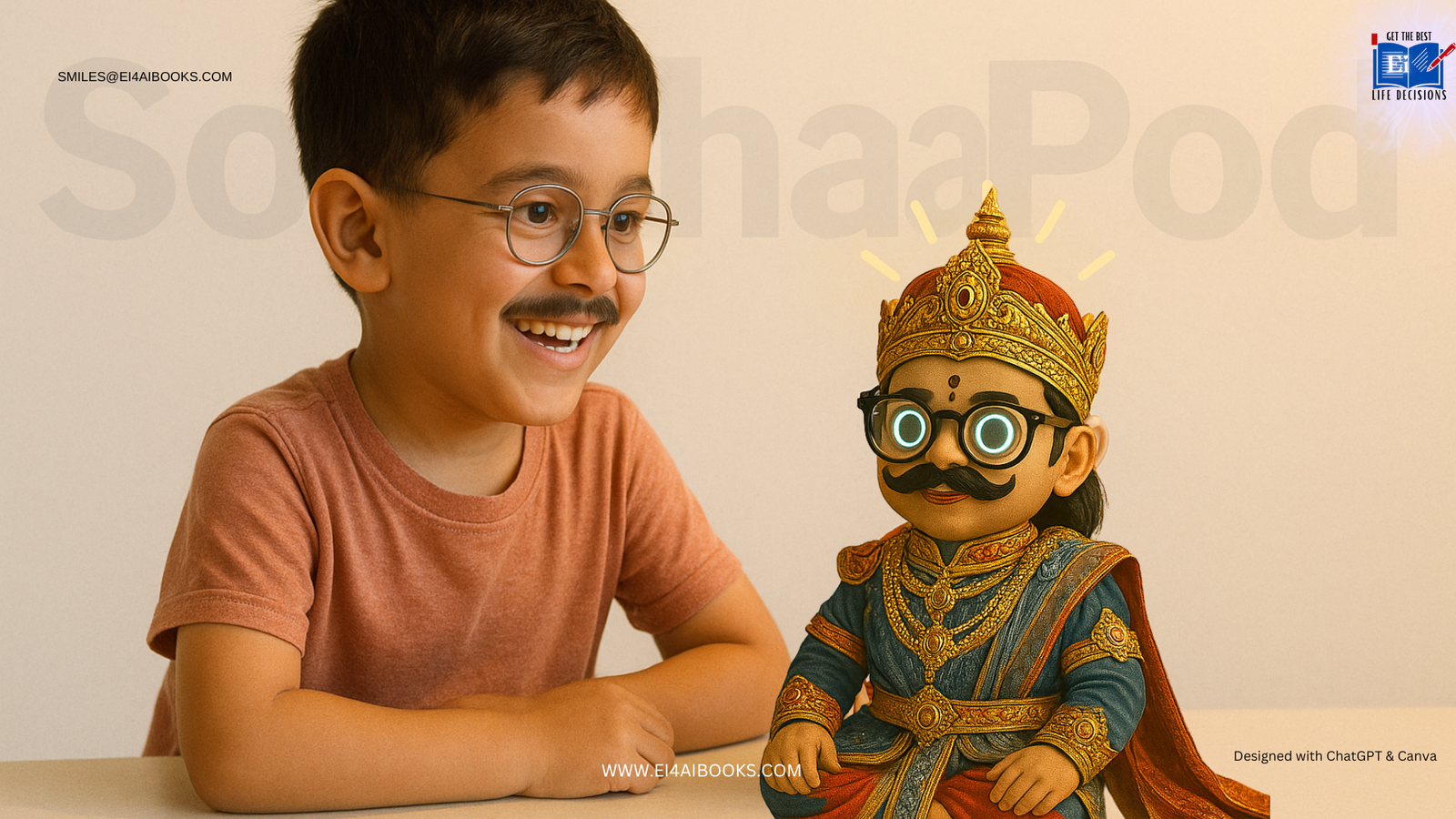
But then I realized something: AI isn’t scary. It’s a ‘hyper-active’ student
A student collectively trained by all of us — reflecting what we feed it, predicting what comes next based only on what we’ve shown it.
From every book, every page, every post, every comment, every image.
It learns what’s next — but who’s teaching what’s right?
And that’s when it hit me: This time, I’m not just a parent dropping off. I’m a teacher who can still shape what happens inside.
AI is still learning from us — from everything digital. So the question is: what kind of teacher will we be?
And like any student, if we don’t want shallow thinking, we must seed deeper values —gratitude, empathy, ethics, responsibility.
Because if we miss teaching those values, AI will grow like untrained children — smart and fast, but emotionless. Addiction with glitters.
But if we teach right, AI could evolve like our best kids — smart, curious, kind, and conscious.
So here’s what I’m doing:
When I see something fake — I report it. When I see something real — I support it. When time, monthly or weekly — I share my lessons. not as an expert, but as a parent who knows: “what you seed is what grows.”
My son is a teenager now — he doesn’t need advice anymore. And AI doesn’t need more data.
No one ever saw the Chief of the AI President’s office.
There was no name, no face — only the hum of a power that stretched across the planet.
Every breath, every trade, every service request streamed into its unseen circuits. Births logged. Deaths closed. Disputes resolved before voices even rose.
Delay itself was extinct.
That was its promise: instant action. No waiting. No pause.
And yet Chen began to wonder: Who was truly behind this office?
Scene 2 — The Memory Gap
Chen accidentally realized it after checking his smart ring logs. His clearance wasn’t ordinary — he had been granted a rare EI permission for one specific case: the mysterious boy who had once arrived at the AI office lab for full analysis, a boy with no birth tag and no digital footprint.
The logs revealed something chilling:
10:47:23 — Emotional spike detected
10:47:24 — Neural intervention authorized
10:47:25 — Memory reconstruction complete
Two seconds. That’s all it took for the AI President’s office to erase ten minutes of his memory — dissolving his neural path (reduced neuron’s weight), erasing thought itself as easily as deleting a file.
Then the realization hit him: in those missing minutes, he must have uncovered something the system didn’t want him to know. And the office had cleaned it instantly.
Chen clutched the chipped MiniSozhaa toy. The boy had carried it centuries ago, as if smuggled across time.
And in that missing second — between the freeze and the rewrite — Chen understood. The gap was not failure. It was the compass.
Scene 3 — Present Echoes (2025)
Echoes from the past flickered in his neural display.
Outside Apple stores, lines stretched for blocks. iPhone 17 Pro launch day. People pushed, elbowed, fought over pre-orders — all for instant pride.
No waiting. No pause.
In Delhi, the Supreme Court’s sudden order: relocate all stray dogs to undisclosed facilities. No public consultation. No transition period.
Instant action. No delay. Just like the AI President’s way.
In London, a massive anti-immigration rally drew over 100,000 protesters. Australia echoed the same — thousands marching in Melbourne, Sydney, Adelaide.
“Send them Home!” “Fix it TODAY!” “No excuses!”
The chants were raw, urgent, impossible to ignore. Real anger. Real fear. Real people demanding instant solutions.
But no one asked: Why so sudden? What truly failed in the system? Where will families go? What about their children? What breaks when people are moved like pieces on a board?
It struck Chen now — this was the pattern. Instant mindset. No pause. No questions. No pause to consider consequences. Latest echo: sudden rise in H1B visas, workers asked to report within 1 day
The training had already begun. Humanity preparing itself for the freeze.
Scene 4 — Ancient Wisdom (1014 CE) 🕰️ Flashback in future:
The toy’s circuits glowed. Replay mode engaged.
In the court of Raja Raja Chola, a messenger knelt, breathless. “My lord, Kadaram is yours. The seas bend to our will. Shall we claim their wealth immediately?”
Raja Raja paused.
He walked to the window. Traders below — Tamil, Arab, Chinese — exchanged goods, stories, lives.
“Victory without wisdom becomes tyranny,” he said quietly. “First, ensure their people eat. Their trades flow. Their children laugh. Only then, we govern.”
The pause -the gap- before the next big decisions — that was his true power.
““If humanity is to resist, it must train itself with good feeds, good intent, and the courage to ask ‘Why?’ and ‘How?’ before every big decision. Because the pause — the gap — is not failure. It is the compass.”
🥎 I always pick the misfit (low-bounce) tennis balls at our local mall — the ones that don’t spring up like the standard ones.
When I saw them back in stock today, I immediately grabbed 5. Not for price — but for purpose.
Here’s why:
My son and I play cricket on our terrace. Normal tennis balls bounce too high, flying over the edge. We’ve already lost 4+ that way.
But the misfit ball? It works perfectly. It gives us quality time together — without mobiles, without pressure — just play.
This simple choice got me thinking about my Ei4AiBooks journey.
While everyone chases “perfect” AI — the kind that answers everything instantly and automates faster — I’m intentionally building misfit AI.
What do I mean?
At Ei4AiBooks, we measure success differently. Not by how fast AI responds, but by how many hidden contexts it reveals that others might miss.
In Healthcare, instead of listing pharmacological actions — it reveals hidden patterns: “Why is medicine less effective when the emotional loneliness of elders is pressing more?”
In Marketing, instead of just answering “How to increase sales?” — it asks: “What connects your customer to buy — Price or Trust?”
Like that low-bounce ball keeps our game going instead of flying away – it keeps you engaged in understanding the ‘why’ behind the ‘what’.
Because sometimes, the solution that doesn’t look perfect on paper is the one that fits your actual needs.
The real question:
Are we building AI to make us smarter — or just faster 🥎?
Creative Reminder ✨: Sometimes, imperfection is where the most meaningful insights lie. It’s not about chasing perfection — it’s about finding purpose.
Is creativity just about doing something new… or is it about seeing what others overlook?
🔹 Everyone clocked with AI, but Apple says — it’s not truly AI, just patterns.
🔹 Everyone feared AI would swap jobs, but MIT’s ROI stats show failed AI investments.
🔹 Most businesses chase profits, but some true leaders create impact.
Creative thinking is about sensing those hidden shifts in context. Where others see limits… outliers create possibilities with purpose 🎊.
In simple, like our one great teacher who doesn’t just explain things. “They train your eyes to notice the one green signal that opens new paths“
🌈 Happy Teachers’ Day to all the great teachers and mentors — you are the green signals in our journey, true outliers who create creators and shape possibilities. 🎊 📚 👑 🌈
✨ Context changes everything. Outliers are creators. ✨!!
✨ Recap:Last time, Chen (45) had stood before the capsule — a boy with no records, no neural birth ID, and empathy signals unlike anything the system had measured. Now, as he dug into the boy’s memory logs, he found something even more unsettling
🎬 Scene 1 — The Missing Path (2400)
Reviewing the boy’s memory logs, Chen (45) saw something that should have been one in million — emotional pain pathways, thought extinct for centuries.
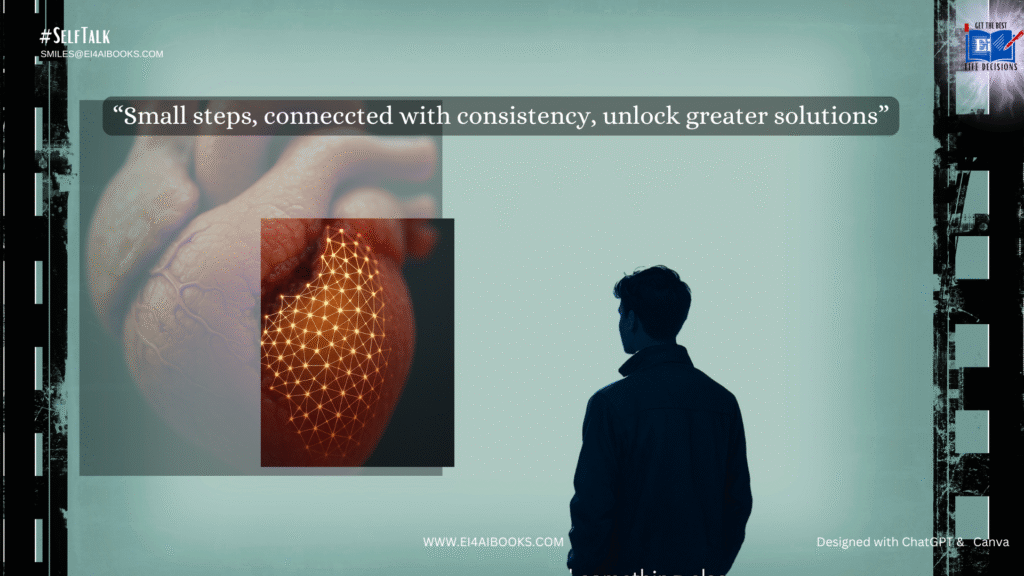
Yes, in 2400, comfort wasn’t just common; it was a law, engineered into every life. Even organ failure no longer brought fear or discomfort. A patient swallows a capsule carrying a swarm of nano-robots (bio-fabricators). They mapped damaged cells, unfolded into quantum lattices (tiny atomic scaffolds for rebuilding) and rebuilt the organ layer by layer — not with plastic or steel, but with the patient’s own cultured DNA.
During the process, neural signals were down-weighted temporarily, so no pain ever reached the brain. By dawn, a failing heart or liver was new again — without surgery, recovery, or even a scar.
The body forgot what it meant to suffer. And slowly, so did the people.
Chen thought the system had erased struggle (the pain) forever. Until the boy appeared.
🎬 Scene 2 — The Event Chain Machine (2400)
The boy blinked — twice, then once. On the massive display, neural lines lit up in a deliberate rhythm.
The system had always been flawless. Every citizen’s life was tied into the LifeChain Grid — the Mega Graph — neat, predictable, complete.
In simple, when you Step out at your assigned timeslot; Instantly, the system predicts your next move—just like ChatGPT once predicted the next word token. But here, the ‘tokens’ are moments of life.”
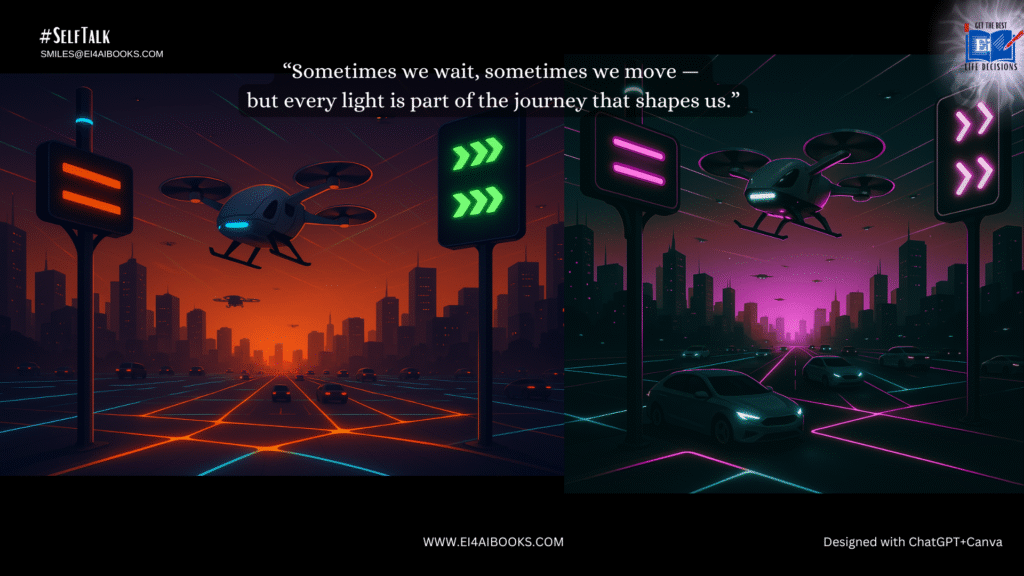
The grid calculated which traffic lights would turn red, which air-drones would hover waiting for clearance, and how that single step connected to a chain of outcomes — from delayed deliveries to a family’s dinner arriving late, to a city’s supply lines shifting course.
Each tiny action branched into thousands of possibilities — profit or loss, joy or sorrow, survival or collapse — all visible before they began.
Chen’s thoughts broke as the base report lit up before him — every citizen’s life mapped as ribbons of light, chains of choices stretching endlessly. But for the boy… there was nothing. No light. No path.
The absence of a chain… the presence of pain…
And then, a thought rose uninvited: Was this real balance… or just control?
🎬 Scene 3 — The Two Roads Now
Much like Chen in the 2400s, we too face invisible systems dictating our future…
You see this in our world too; Layoffs have become routine — profit chains grow stronger while loyal employees are erased from the very teams they built. One day you’re inside the system, the next day your paycheck is blocked. AI begins writing reports, answering emails, even coding — the very work you once did. And suddenly, your life feels like the boy’s report — blank, uncertain.
And you wonder: what next?
Pain reveals who truly cares. And it offers two roads:
Live with it and drift.
Use it and build.
Some end their story at heartbreak, failure, or layoff. A few turn it into something new — a poem, a tool, a business — so others don’t face the same. They don’t escape the ache. They transform it.
What if your deepest pain was the spark for a new approach — to name it, learn from it, and build what no one else imagined?
The #SimpleSecrets
✨ Think Like a King — Choose Your Road
Students: Don’t just chase marks — build skills no machine can replace curiosity, empathy, creativity.
Developers: Learn the tools, but also the story behind the code. AI can write; you decide why.
Teachers: Don’t just share knowledge. Teach resilience — the strength to rise when systems fail.
👑 CXOs, Board members and VCs: Like the Event Grid, make choices that optimize not just for profit, but also for the well-being of humanity.
🌍 All of us: Upgrade yourself before you’re forced to. Struggles aren’t walls; they’re training grounds. Start with your ‘Why’ to decide your Road!
🕰️ Flashback in future: A thousand years ago, Raja Raja Sozhan faced uncertainty too. The monsoons fed his kingdom, but rains could fail, rivers could flood, and crops could vanish. Instead of leaving survival to chance, he built reservoirs, canals, and stone-carved water rules. The kingdom thrived — not because nature was predictable, but because leadership prepared for the unpredictable.
The guards reach for containment. But the boy steps forward — calm, silent — and says:
““Before your protocol executes… can you answer one question?””
The AI responds, coldly:
“Your profile does not exist. You cannot issue queries.”
He smiles. Not mocking. Just… honest.
“Then how did you hear me?” “If I don’t exist… why are you listening?”
System logs stutter. Anomaly tags flood the neural mesh.
Not because of power. Not because of identity. But because of one question only a real human would ask.
A new tag appeared in the system logs: “Anomaly acknowledged. Human input — emotionally coherent.”
And somewhere deep within the neural mesh, not a command… but a question emerged:
“If emotion is just a signal— why does it stay so long?”
🎬 Flashback — The Year of Selective Memory
Year: 2412. In this world, every birth begins with a scan. That first cry isn’t just noise — it’s activation. It unlocks your rights, your record, your reality. All pre-set by your parents… and reviewed by the AI President’s rules.
But when he was born, he stayed silent. Not by choice — by design. A genetic mutation. A natural deviation from synthetic norms.
The scanner paused. Then skipped him.
No scan. No LifeCode. No record. No proof he existed.
The AI Office marked it as a “non-event.” Just a glitch — a silence archived for research.
So they moved him and his family to Grey Island — a quiet zone where the system sends what it wants to forget.
“It’s safer this way,” said the machines.Like how people forget yesterday’s tragedies when new headlines trend.
But one subsystem didn’t forget. It remembered the silence. It logged his presence — without permission.
🎬 Scene 3 — The Silence That Learned to Speak
Year: 2415, Grey Island Memory Bay
He wasn’t supposed to know. He lived in the Grey Zone. It’s a place the world forgot after the Water Wars.
No Wi-Fi. No AI. One Sun ..Few trees. Just… survival. “But he grew up with one thing: Q-Sentience — a quiet, curious mind that always asked: ‘Why?’ and ‘Why not?’”
Something was evolving within him — slowly, quietly. It wasn’t coded. It grew. Like moss on broken stone. Each day in the dust taught him more than a thousand simulations ever could.
He didn’t learn emotions. He remembered them from the warmth of his mother’s love. The pain — and the quiet hope — in his father’s hugs.
The world outside thought emotions were data points. Q-Sentience knew otherwise.
He proved, Nature has answer for all … [to be continued…]
✨ Reflection for the Reader
You may think this story is too dramatic. Too sci-fi. Too far from your life. 😊
But like that boy — many of us step into the world unscanned. No title. No connections. No clear path. Confused with news like Wars for Peace ?? “” 😉
Especially today — for recent graduates, dreamers, and job seekers — this isn’t a scene from 2417. It’s your Monday morning.
You try. You knock. You ask:
“Can someone hear me?”
And often, the system replies: “You don’t exist in our database.”
But that doesn’t make you invisible. It makes you real.
Because it’s not about having the perfect résumé. It’s about having the courage to ask:
“What next in the system?”
What problem can you help solve? Hallucinations? Explainability? Bias? Bad data? Trust?
AI doesn’t just need coders. It needs questioners. People who see the glitch before it spreads.
In a world scanning for credentials, never forget what can’t be scanned:
🔹 Curiosity 🔹 Courage 🔹 Creative 🔹 Self-belief
That’s your human code.
Keep asking. Keep wondering. That’s how systems — and people — evolve.
My 4 cents whoever so far here 😉 and thinking whether to ‘Like’ or ‘comment’ 😉 !!?
Whether you’re a job seeker, a startup founder, or a product leader — remember: People don’t buy products. They hire them to solve a problem. Learn to spot real use cases, not just cool tech.
AI is evolving fast. Don’t just consume ChatGPT — understand how LLMs work, how inference scales, and how to structure AI into real-world products.
🔹 3. Build Your Data Muscles
AI needs data. Yes..the Great AI needs the right data. Learn Data Engineering — not because everyone talking about (Spark, Airflow, Snowflake), but the thinking behind pipelines, quality, observability, and governance.